
Investing in a set of brass cookware is more than just a kitchen upgrade; it is an investment in heritage, health, and culinary tradition. These golden-hued vessels are renowned for their superior heat conductivity and timeless beauty. However, brass is a living metal. Unlike disposable non-stick pans, brass reacts to its environment. To ensure your brass pots and handis don’t just last for years, but for generations, you need to understand the specific rhythm of seasoning, cleaning, and caring for them.
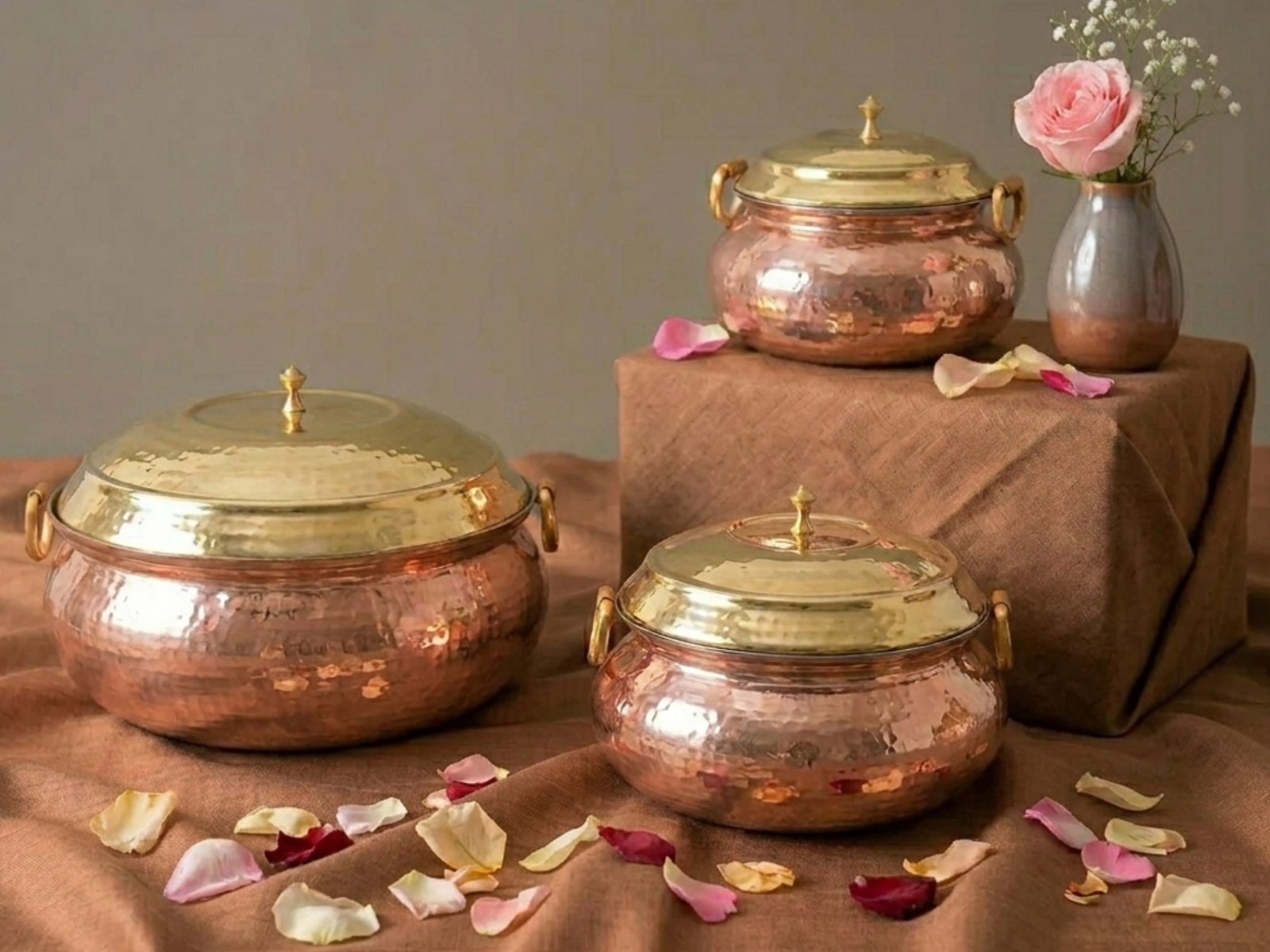
Here is your ultimate guide to preserving the soul of your kitchen.
Why Does Brass Pots Need Special Attention?
Before diving into the “how,” it’s important to understand the “why.” Brass is an alloy of copper and zinc. It is naturally reactive to acidic foods and moisture in the air. If left untreated, it will tarnish (develop a patina) or leach metallic flavors into your food.
This is why most brass pots & cookware intended for cooking is lined with a different metal—traditionally tin—in a process known as Kalai.
The Kalai Factor – Understanding Your Pot’s Lining
To care for your brass pots correctly, you must first know what is inside it. There are generally two types of brass cookware:
- Tin-Lined (Kalai) Brass: This is the gold standard for everyday cooking. The tin acts as a barrier, preventing the brass from reacting with food. It gives the inside of your pot a silvery-white appearance.
- Unlined Brass: These pots are usually used for water storage, decorative purposes, or specific slow-cooking methods where the pot is seasoned heavily (like an iron skillet).
The Golden Rule: If your pot has a tin lining, you treat the tin, not the brass, during cooking.
How to Season Your Brass Cookware?
“Seasoning” refers to preparing the surface for cooking. For unlined cast iron, this means oil. For tin-lined brass, seasoning is slightly different.
For Brand New Tin-Lined Brass
When you bring home a new brass pots, it needs a gentle wash to remove any manufacturing dust or protective coatings applied during shipping.
- The First Wash: Wash the pot with warm water, mild dish soap, and a soft sponge. Rinse thoroughly.
- The “Milk” Seasoning (Optional but Recommended): In many traditional households, new brass vessels are “seasoned” by boiling milk in them. Fill the pot with milk and water (50/50) and bring it to a gentle boil. The proteins in the milk fill any microscopic pores in the tin, creating a smoother surface.
- Discard and Rinse: Discard the milk mixture, rinse the pot with warm water, and wipe dry. It is now ready to use.
How to Clean Brass Cookware?
This is where most people go wrong. Abrasive cleaners and harsh chemicals are the enemy of a long-lasting brass pots.
Daily Cleaning Routine
- Cool Down First: Never plunge a hot brass pot into cold water. This can cause thermal shock and crack the tin lining. Let it cool naturally.
- Gentle Scrubbing: Use a soft sponge or a natural bristle brush. Avoid steel wool or green scrubbing pads.
- The Soap Rule: Use a mild, non-citrus dish soap. Harsh chemicals can corrode the tin.
- Hot Water Rinse: Rinse thoroughly with warm/hot water.
- Immediate Drying: This is crucial. Do not air dry. Water spots lead to tarnish. Use a soft cotton cloth to dry the pot inside and out immediately after washing.
Deep Cleaning for Stubborn Stains or Tarnish
If your pot has dark spots or the exterior brass has lost its shine:
- For the Tin Interior: If food is stuck, soak the pot in warm soapy water for 15-20 minutes. Gently scrub with a non-abrasive pad. Never use acid-based cleaners on tin.
- For the Brass Exterior: To restore the golden shine, make a natural paste:
- Mix lemon juice and baking soda (or cream of tartar) into a paste.
- Apply it to the exterior only (avoid the tin lining).
- Let it sit for 10 minutes.
- Gently rub with a soft cloth, rinse immediately, and dry thoroughly.
Warning: Avoid using tamarind or high-acid cleaners on the inside of tin-lined pots.
Maintenance Tips for Longevity
To ensure your brass cookware becomes a family heirloom, follow these simple rules:
1. Avoid Thermal Shock
Always allow the pot to cool down to room temperature before washing. Similarly, when cooking, start with medium heat. Brass heats up incredibly fast; you don’t need a high flame.
2. Watch Your Utensils
Metal spoons and spatulas can scratch and dent the soft tin lining over time. Stick to wooden, silicone, or heat-resistant nylon utensils.
3. Store It Dry
Moisture is the enemy of metal. Before storing your pots:
- Ensure they are 100% dry.
- Place a soft cloth or paper towel inside the pot and put the lid on. This absorbs any residual humidity and prevents musty smells.
4. The Art of Re-Tinning (Re-Kalai)
No matter how well you care for it, the tin lining will eventually wear thin after years of use (usually 5-10 years). You will know it’s time for re-tinning when you see the reddish hue of the brass peeking through the silver lining.
This is not a sign of a bad pot; it is simply maintenance. You can take your pots to local artisans who specialize in Kalai to have them re-lined, giving them a second life.
What NOT to Do
To make your brass last generations, commit these “never” rules to memory:
- Never cook acidic foods (tomatoes, vinegar, citrus) for long periods in unlined brass.
- Never use bleach or ammonia to clean the exterior.
- Never put brass cookware in the dishwasher. (The high heat and harsh detergents will destroy it.)
- Never store leftovers in the brass pot. Transfer food to a glass or ceramic container for refrigeration.
The Reward of Heirloom Care
Caring for brass cookware requires a bit more mindfulness than tossing a non-stick pan in the dishwasher. But the reward is immense.
With every gentle wash and careful dry, you are preserving a piece of art. These pots develop a character over time—a slight patina here, a well-worn handle there—that tells the story of the meals shared and the hands that cooked them.
By following this guide, you ensure that the pot you use today can be passed down to your children and grandchildren, still shining and still cooking delicious meals.
Ready to Start Your Heirloom Collection?
If you are looking for authentic, high-quality brass pots and cookware that is built to last for generations, you need a source you can trust. Don’t settle for mass-produced imitations that lack the purity and craftsmanship of true artisan ware.
If you really want to buy products that are 100% pure and from a trusted partner, contact Copper Brazier.