
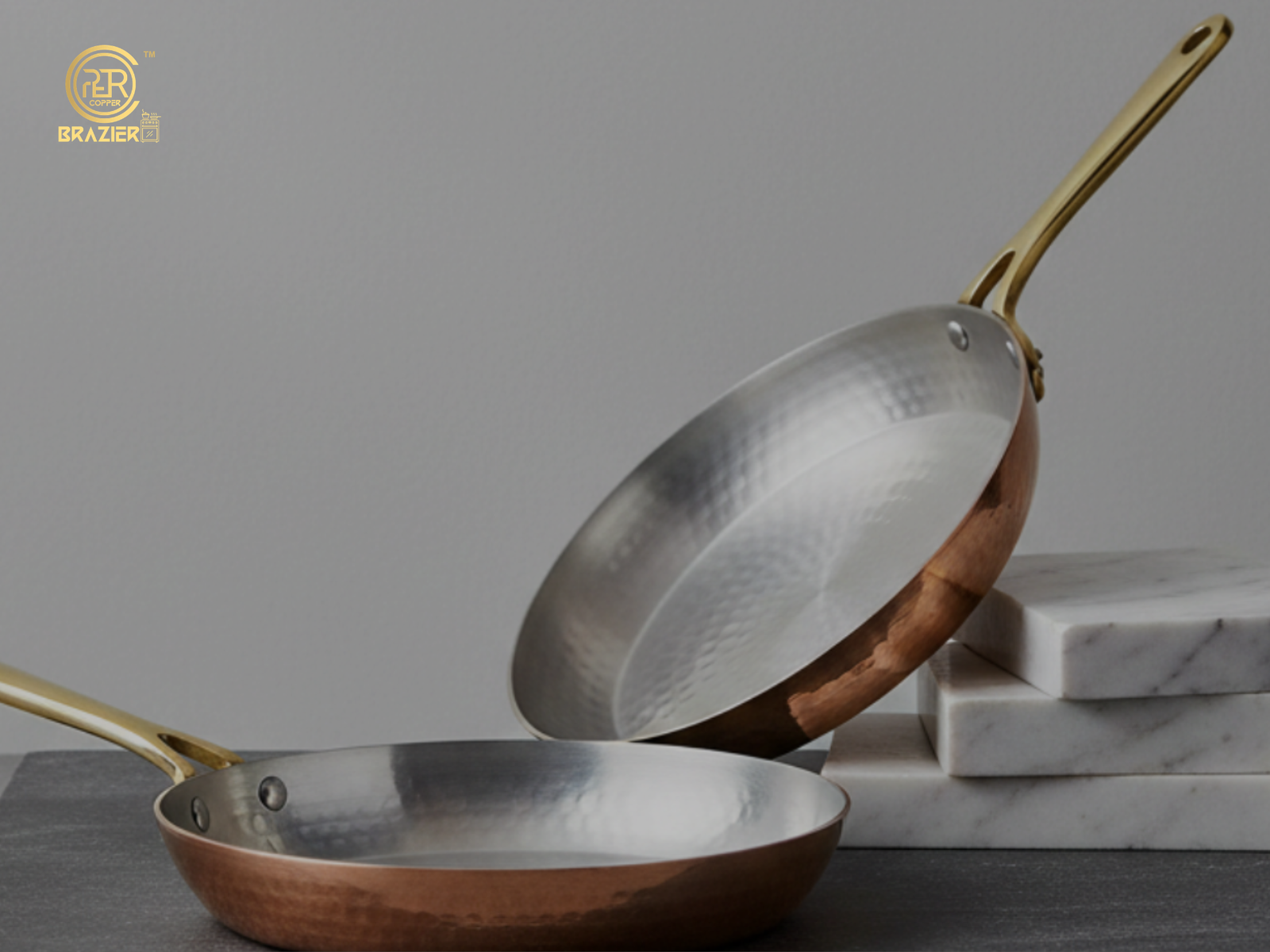
Why Expensive Copper Fry Pans Are Actually the Cheapest in the Long Run?
I still remember the exact moment my relationship with cookware changed forever. It was a Sunday morning. Guests were arriving in an hour. I stood at my stove, spatula in hand, staring down at my third non-stick frying pan in four years. The coating had started peeling again. Tiny black flecks floated in the eggs I was scrambling—the eggs I was about to serve to people I loved. I wanted to cry. Not because of the eggs. Because of the familiar, sinking realisation that I would soon be back at the home goods store, handing over another $70 because i don’t know about copper fry pan , bringing home another pan that would work beautifully for a few months and then quietly, inevitably betray me. That morning, I did something that felt utterly insane. I decided to spend $300 on a single copper frying pan. My wallet screamed. My practical brain called me reckless. But somewhere beneath all that noise, I knew something I hadn’t yet put into words: I was tired of paying for things twice. I was tired of kitchens that promised durability and delivered disappointment. I was tired of a cycle that had me spending more money over time than if I had simply bought quality from the very beginning. That morning, I stopped buying pans. I started investing in them. The Great Kitchen Lie We’ve been sold a story. It goes something like this: A $50 pan is cheaper than a $300 pan. That’s just math. That’s common sense. That’s being smart with your money. Except it’s none of those things. It’s the most expensive lie in the kitchen. Because that $50 pan isn’t just $50. It’s $50 today, and another $50 in two years, and another $50 in two more years. It’s the quiet, recurring subscription fee you never agreed to but keep paying anyway. It’s the cost of burned food because heat distribution was uneven. It’s the cost of time spent scrubbing surfaces that promised they’d never stick. It’s the cost of frustration that slowly, invisibly steals the joy from something that should be a pleasure. Add it all up over a decade, and something strange happens. The “expensive” pan becomes the cheap one. And the “cheap” pan reveals itself to be the most expensive thing you ever bought. Why Cheap Pans Keep Taking Your Money? Here’s what nobody tells you when you buy a budget pan. It arrives with an invisible expiration date stamped into its very design. Non-stick coatings aren’t built to last. They’re built to feel wonderful for about eighteen months and then degrade quietly, shedding microscopic particles into your food, losing their non-stick properties, turning from kitchen hero to kitchen frustration faster than you ever expected. Stainless steel budget options aren’t much better. Thin construction means hot spots that burn your food in one place while undercooking it in another. Warping over time means a pan that no longer sits flat on your burner. Handles that loosen. Rivets that weaken. None of these things happen because you did something wrong. They happen because the pan was never designed to last. It was designed to be replaced. And every time you replace it, you hand over more money. More time. More energy. Another Saturday afternoon spent researching pans instead of cooking in them. Another box to recycle. Another tool in your kitchen that feels slightly less trustworthy than the one before it. Cheap pans aren’t a one-time expense. They’re a subscription. And subscriptions, as anyone who’s ever checked their bank statement knows, always cost more in the long run than buying something outright. What Makes Copper Different? Copper doesn’t have an expiration date. It doesn’t wake up one morning and decide to stop working. It doesn’t come with coatings that promise forever and deliver a few seasons. It doesn’t warp, it doesn’t degrade, it doesn’t quietly become less useful with every passing year. What copper does is transform. The bright, gleaming surface you fall in love with on day one will slowly develop character. A rich, warm patina that tells the story of every meal you’ve made. Every sauce. Every sear. Every dinner shared with people you love. It becomes more beautiful with age, not less. More valuable. More yours. And underneath that evolving surface? The same flawless performance. The same instant heat response. The same even cooking that makes copper the material of choice for chefs who demand reliability. I’ve held copper pans that were made before my grandparents were born. They cook just as well today as they did a hundred years ago. Find me a non-stick copper fry pan from 1925. Go ahead. I’ll wait. You can’t. Because they didn’t exist. And if they had, they’d have been in a landfill decades ago. When you buy copper, you’re not buying a copper fry pan for this year or next year. You’re buying a copper fry pan for the rest of your life. And probably for whoever cooks in your kitchen after you. The Costs That Never Make It to the Price Tag Let me tell you about the math that spreadsheets can’t capture. There’s a cost to cooking with tools that frustrate you. It’s not a line item. It won’t show up on your bank statement. But you feel it every time you stand at the stove. The cost of burned food that should have been perfect. The cost of extra oil you use trying to compensate for surfaces that no longer release food easily. The cost of time spent scrubbing and soaking and wishing your copper fry pan worked as well as it used to. The cost of that small, quiet voice that says maybe you’re just not a good cook—when really, it’s the pan that’s failing you. And then there’s the cost of constantly thinking about replacements. The mental energy spent noticing that your pan is on its last legs. The research. The comparisons. The trip to the store. The box you recycle. The new