
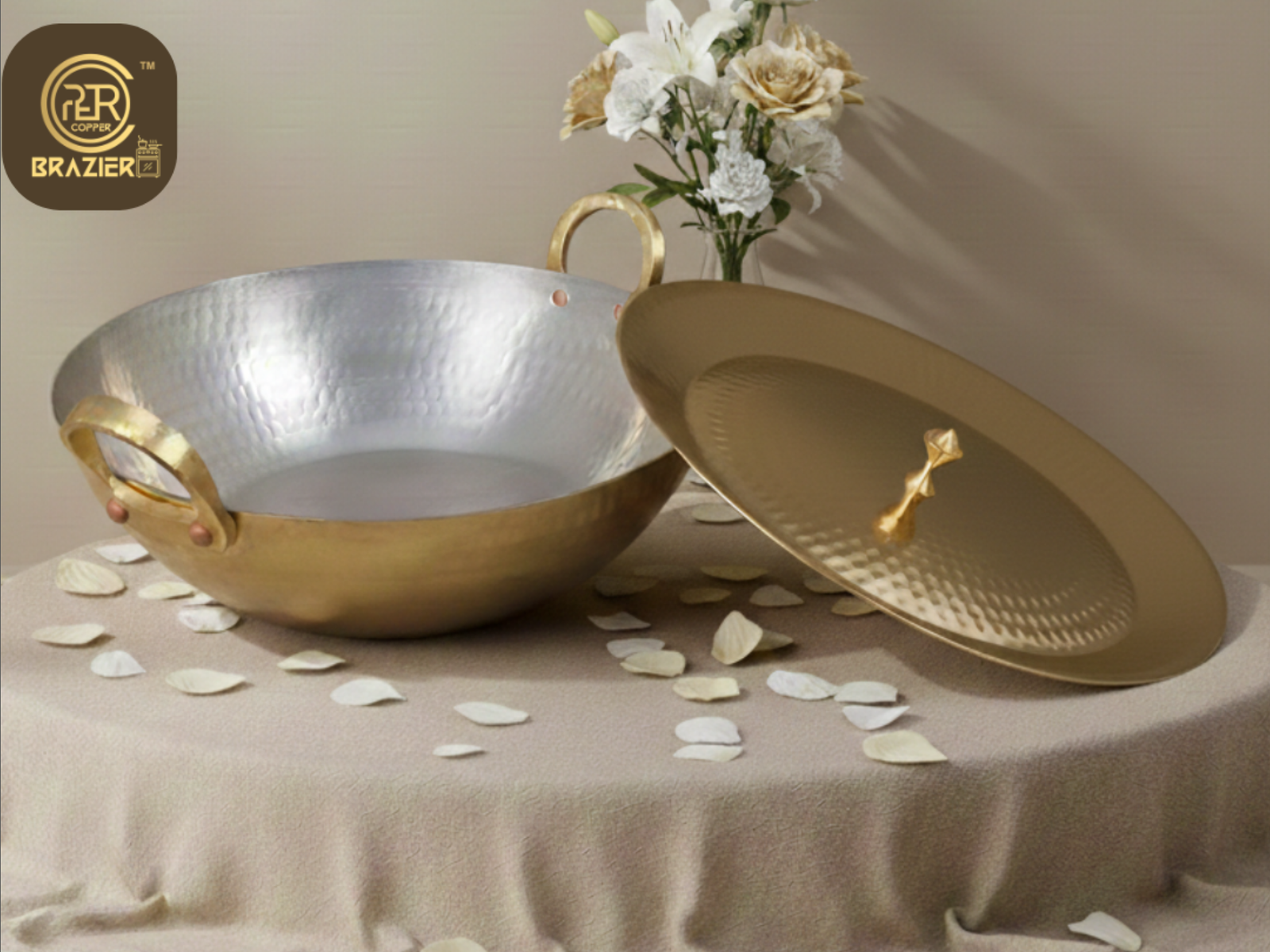
Why Cooking in a Brass Kadhai Makes You Feel Closer to Your Roots?
There’s a certain magic that happens when you lift the lid off a brass kadhai. It’s not just the aroma of simmering curry or the sight of mustard seeds crackling in warm ghee. It’s something older. Something that hums low in your chest and whispers, “You belong here.” In our rush for non-stick convenience and sleek stainless steel, we’ve traded something precious. Not just heirlooms. But a feeling. A connection. Today, let me take you back—not with guilt or nostalgia alone, but with the gentle clang of a brass ladle against a vessel that remembers your grandmother’s hands. The Sound That Stopped Time Close your eyes for a second. Think of the brass kadhai your grandmother used. Not the shiny, showpiece kind. The one with a darkened bottom from years of direct flame. The one that sat on a low chulha or a gas stove with quiet dignity. When you cook in brass today, the first thing you notice is the sound. That deep, resonant thud when you place it on the counter. The soft ring when you stir. It’s not the hurried clatter of modern utensils. It’s a patient, grounding rhythm. That sound alone pulls you out of your phone-scrolling, work-email-checking haze. Suddenly, you’re present. Suddenly, you’re cooking the way your ancestors did—with intention. The Taste That Remembers Here’s something no Teflon pan can give you: memory in every bite. Food cooked in a brass kadhai tastes… different. Richer. Deeper. It’s not imagination. Brass is a slow, kind conductor of heat. It doesn’t rush the onions to brown or the tomatoes to break down. It lets them talk to each other. It lets the spices release their soul, not just their color. That slow, even cooking brings out flavors that feel familiar even if you’re making a dish for the first time. Have you noticed? Dal cooked in brass tastes like Sunday afternoons from twenty years ago. A simple vegetable curry tastes like the one your mother made when you were home with a fever. That’s the root calling. Not through words. Through taste. The Ritual of Care of Brass Kadhai Here’s the part most people don’t talk about—but it’s actually my favorite. Brass cookware asks for a little love. You can’t throw it in a dishwasher. You can’t scrub it with harsh steel wool. You learn to clean it the old way: with tamarind or lemon and a soft cloth. You dry it immediately. You polish it sometimes, or you let it patina with pride. And in that small act of care—washing, drying, rubbing—something shifts. You slow down. You honor the vessel. You realize that cooking isn’t a chore to optimize. It’s a relationship. That’s exactly what your roots feel like. Not a museum piece you admire from afar. Something you tend to do, daily, with small, loving hands. Why Your Kitchen Needs a Brass Kadhai Right Now? We live in a world of instant everything. Instant pots, instant gratification, instant forgetting. A brass kadhai is the antidote. You don’t have to live in a village or own a farm to feel rooted. You just have to cook in a vessel that remembers. Let Your Roots Guide You Home The next time you feel untethered—like modern life has pulled you a little too far from who you are—don’t book an expensive trip to find yourself. Just walk into your kitchen. Take down that brass kadhai. Make something slow. Rice and lentil stew. A mustard fish curry. Even just roasted vegetables with jeera and turmeric. Listen to the sound. Watch the steam rise. Taste the difference. You’ll feel it. That quiet, unshakable feeling of coming home. If this post stirred something in you, don’t let it fade. If you want to know more about brass cookware—how to season it, what to cook in it, or why it turns black sometimes—then you must read our other blogs or simply ask us your doubts. We love talking about this stuff. And when you’re ready to bring home a piece of your heritage, remember: if you want to buy genuine and 100% pure handmade brass cookware, your right choice is Copper Brazier. No shortcuts. No hollow promises. Just honest, heirloom-quality brass that will outlive you and still tell your story. Cook slowly. Stay rooted.